
Building a Connected Growth Stack for Property Managers: Tenant Inquiries, Showing Automation, and Portfolio Workflow Architecture
By Farkhan Shah, AI Operations Lead | Everything AI, LLC | Estimated Read: 11 min | Category: Property Operations
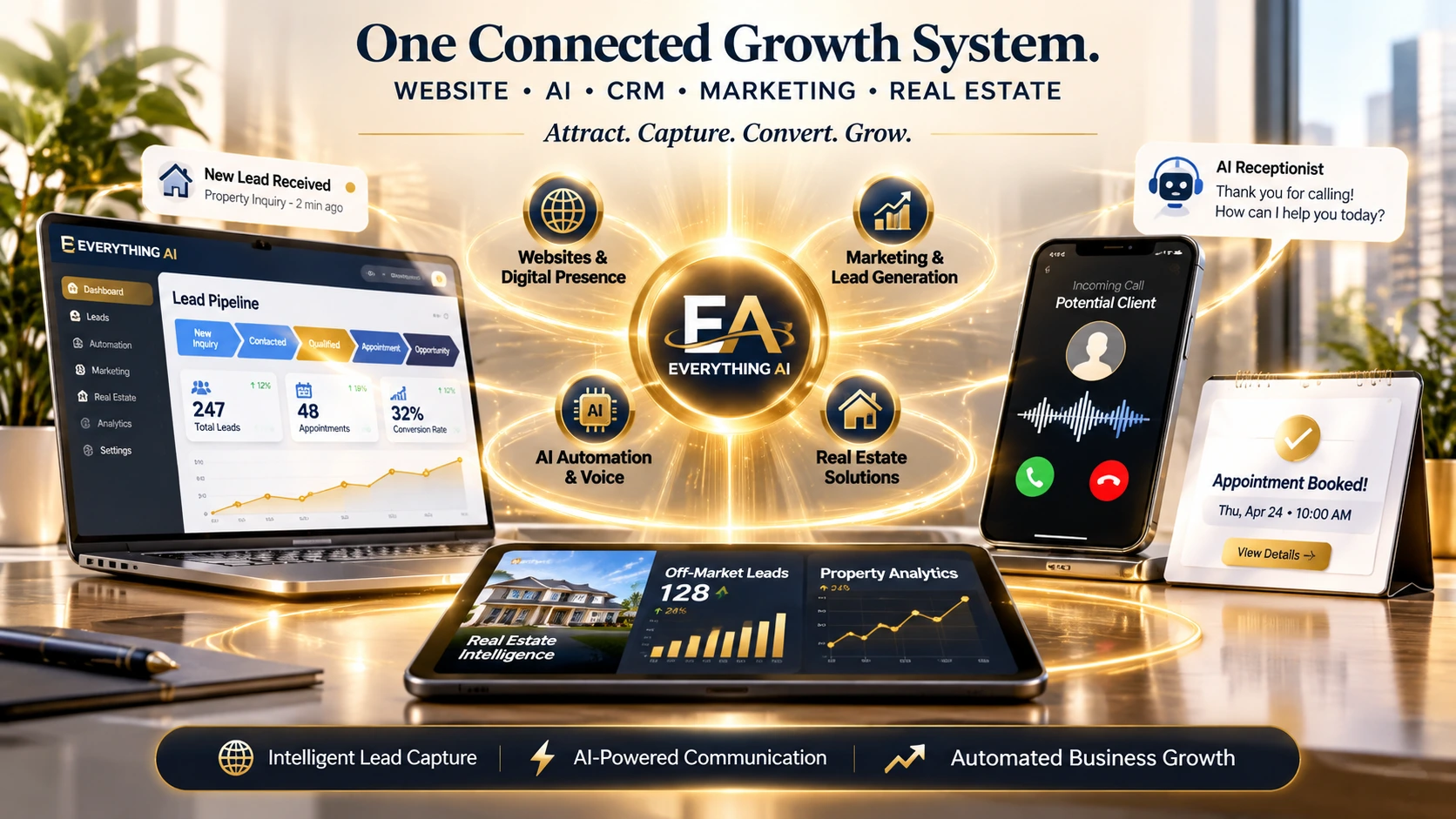
Property management does not scale by adding leasing staff — it scales by connecting the intake, qualification, scheduling, and maintenance systems that already touch every unit. This guide breaks down the architecture behind a connected growth stack for property managers and landlords: tenant inquiry capture, automated qualification and showing scheduling, PMS and CRM integration, maintenance triage with vendor escalation, and the operating comparison that shows where connected infrastructure changes a manager's unit capacity without changing their headcount.
Automated acknowledgement within the lead-decay window — the single largest controllable factor in tenant inquiry retention.
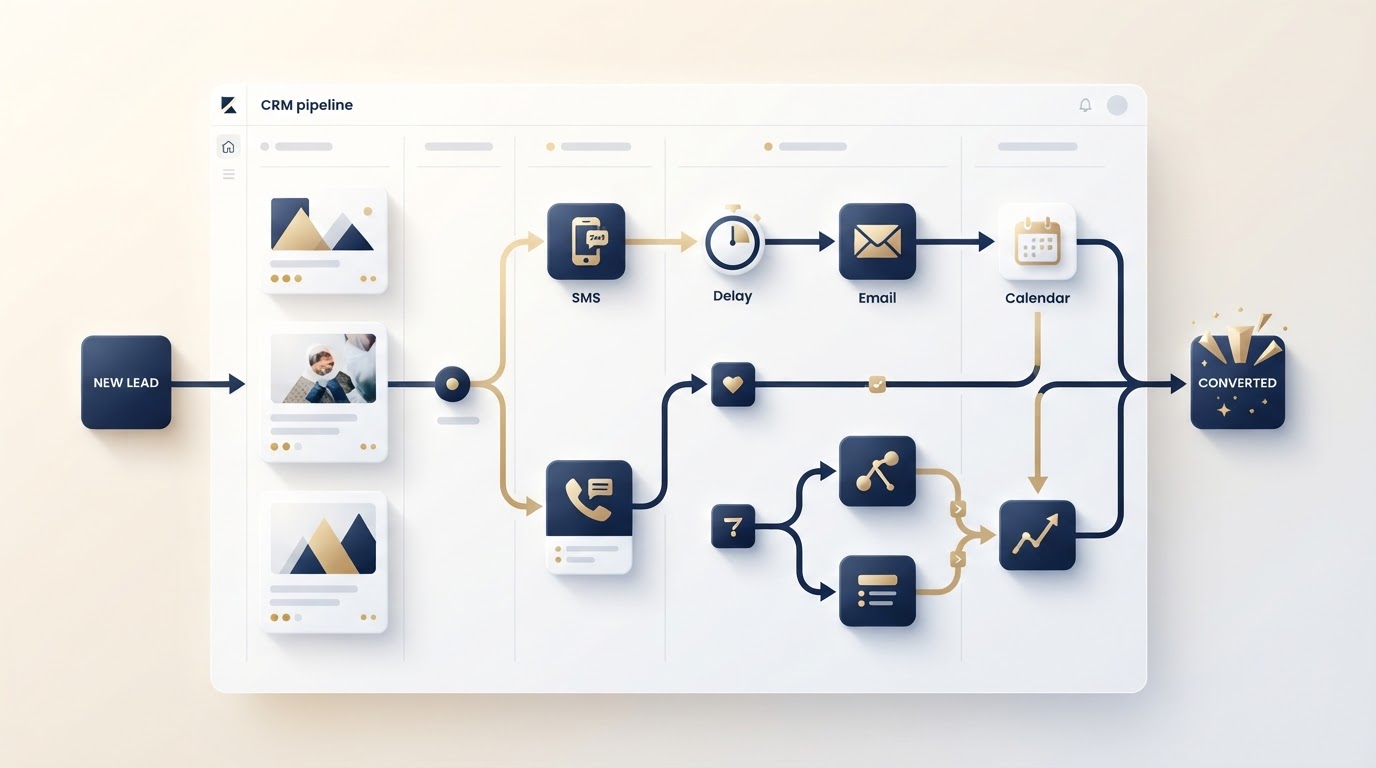
The minimum connected workflow required to move a tenant inquiry from form submission to a booked, logged showing.
Showing logs, lead status, and maintenance tickets sync to the property management system in real time — no nightly spreadsheet reconciliation.
Income multiplier, credit floor, and move-in timeline applied uniformly to every applicant — consistent, documented, and defensible.
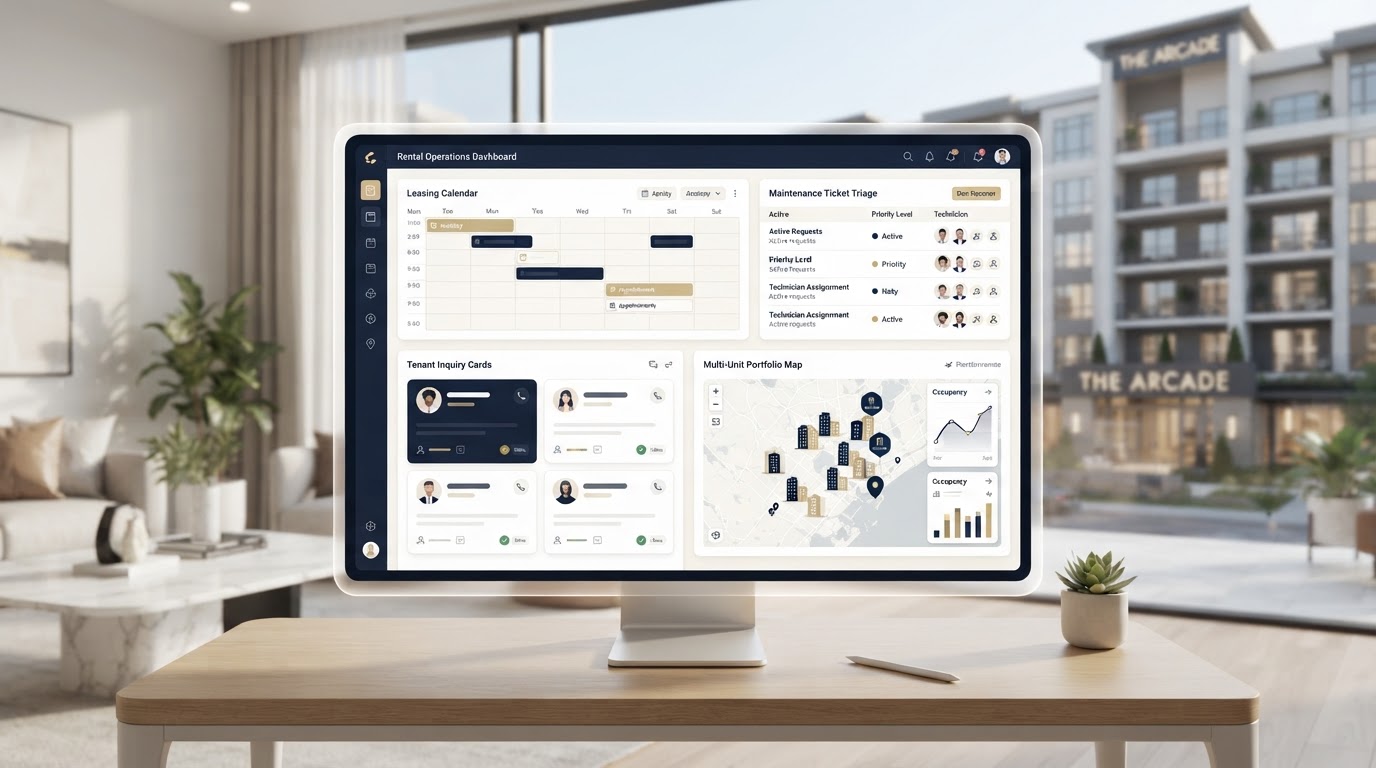
Traditional Property Management vs. Everything AI Connected Growth Stack
An objective operating comparison of a manual property management workflow against a connected growth stack. Figures are illustrative ranges, not guaranteed outcomes.
| Operational Domain | Traditional Manual Property Management | Everything AI Connected Growth Stack |
|---|---|---|
| Rental Unit Showing Requests | Manual back-and-forth phone/email scheduling | Instant 24/7 automated calendar screening & booking |
| Maintenance Emergency Triage | Delayed voicemail checks after hours | Immediate AI classification & automated vendor alert |
| Multi-Property Lead Tracking | Fragmented spreadsheets & inbox queues | Centralized portfolio pipeline with automated stage routing |
| Operational Capacity Limit | ~50 - 75 Units per property manager | 200+ Units per manager with connected automation |
Automated Leasing & Tenant Qualification Workflow
How a prospective renter moves from vacancy listing to a booked showing and synced PMS ledger with zero manual coordination.
Inquiry Capture
A prospective tenant lands on the listing page or sends an SMS and submits preferred unit, move-in window, household size, and pet status through a conversion-focused intake form — captured with a timestamp and source channel, routed into the portfolio pipeline without a leasing agent touching the phone.
Automated Qualification
The stack evaluates the inquiry against documented criteria — income multiplier, credit floor, move-in timeline, pet policy — and delivers an instant self-serve showing booking link. Only applicants meeting the criteria occupy a showing slot; the rest are nurtured or declined with a documented reason.
Showing Scheduling
Pre-qualified applicants select an open showing window from live calendar availability. The system dispatches automated door codes and calendar invites, logs the appointment to the unit record, and sends a reminder sequence that reduces no-shows.
PMS & CRM Ledger Sync
Every action syncs back to the property management system and CRM ledger in real time: showing booked, lead status moved, maintenance ticket opened, vendor assigned. The portfolio pipeline reflects the true state of every unit without a spreadsheet or a nightly manual update.
01.The Multi-Unit Operational Bottlenecks
Property management is a business of parallel inquiries. A single vacant unit generates dozens of unqualified questions — is the unit still available, are pets allowed, what is the move-in date, what are the income requirements. A portfolio of twenty units multiplies that by twenty. The leasing agent who answers each inquiry by hand is the bottleneck, and the bottleneck does not scale by adding headcount; it scales by adding system.
The first bottleneck is intake. Inquiries arrive across multiple channels — the listing website, Zillow or Apartments.com, SMS, phone, and email — and each channel deposits its data in a different shape. A manual operation reconciles these by hand: copying the address, pasting the phone number, noting the pet status in a spreadsheet. Every copy is a chance to lose the inquiry, and every reconciliation cycle is time the tenant spends waiting for a response they could have received instantly.
The second bottleneck is qualification. Every showing has an opportunity cost: the agent's travel time, the calendar slot, and the unit's vacancy days. A showing granted to an applicant who cannot meet the income requirement is a wasted slot that delays the qualified applicant behind them. Manual qualification is inconsistent — one agent screens by feel, another by checklist — and the inconsistency produces both fair-housing risk and wasted showings.
The third bottleneck is follow-up. A showing that ends without an application is not a lost lead; it is a stalled lead. The manual operator forgets the reminder, the applicant cools, and the vacancy extends. The connected stack treats follow-up as infrastructure: a documented sequence that fires automatically, acknowledges the showing, and nudges the application forward without a human remembering to do it.
These bottlenecks compound across a portfolio. A property manager handling fifty units manually spends the majority of their day on intake, qualification, and follow-up — the exact work that does not require judgment — and reserves almost no time for the work that does: owner reporting, portfolio acquisition, and the preventative maintenance that protects the asset.
The bottleneck is not the leasing agent — it is the unconnected intake, qualification, and follow-up work that surrounds them. Connect those systems, and the same agent handles a materially larger portfolio without a drop in service quality.
02.Portfolio Infrastructure & PMS Integration
A connected growth stack is not a single product layered on top of a property management system. It is a set of components that pass information between each other and into the PMS with as little friction as possible. Understanding the stack is the difference between buying a tool and building a system that scales with the portfolio.
- Rental listing websites: mobile-first pages with high-resolution galleries, virtual tours, and embedded screening forms that capture qualified tenant inquiries 24/7 without a leasing agent on the phone.
- Conversational qualification: an intake layer that evaluates income, credit, move-in timeline, and pet policy against documented criteria — producing a scored, tagged applicant, not a voicemail message.
- Automated showing scheduler: a calendar integration that reads real-time availability, books the showing, dispatches door codes and invites, and logs the appointment to the unit record automatically.
- PMS and CRM bridges: webhook and API connections that push showing logs, lead status, and maintenance tickets into Buildium, AppFolio, Yardi, or the property management software the portfolio already runs on — without manual data entry or nightly reconciliation.
- Maintenance triage and vendor dispatch: a routing layer that classifies a tenant's reported issue by urgency and dispatches the correct response — an instant vendor alert, a same-day work order, or a self-troubleshooting guide — while logging the ticket to the unit record.
- Portfolio pipeline visibility: a multi-unit dashboard that shows the true state of every unit — vacancy, inquiry volume, showing status, application stage, maintenance backlog — in one view rather than across spreadsheets and inboxes.
The stack does not replace the property management system — it feeds it. We evaluate the existing PMS and configure the integration rather than forcing a migration. The ledger stays where the portfolio operator already trusts it.
03.The Tenant Triage Workflow
The tenant triage workflow is the contract between the components. Each stage has a defined input, a defined output, and a defined handoff into the PMS ledger. When any stage fails to produce its output, the failure is observable in the pipeline rather than buried in an inbox.
Stage one — inquiry capture. A prospective tenant lands on the listing page or sends an SMS and submits their interest through a conversion-focused intake form. The form is short by design; every additional field trades completion rate for information. The submission creates a lead record with a timestamp, a source channel, and the raw intake data, routed into the portfolio pipeline without a human touching it.
Stage two — automated qualification. The stack evaluates the inquiry against documented criteria — income multiplier, credit floor, move-in timeline, pet policy — and delivers a self-serve showing booking link to applicants who meet the criteria. Applicants who do not meet a criterion are nurtured or declined with a documented reason. This stage is where the connected stack earns its keep: it converts a raw inquiry into a qualified, pre-screened showing slot without leasing-agent labor.
Stage three — showing scheduling. A pre-qualified applicant selects an open showing window from live calendar availability. The system dispatches automated door codes and calendar invites, logs the appointment to the unit record, and triggers a reminder sequence that reduces no-shows. The showing is booked without a single phone call between the tenant and the leasing office.
Stage four — PMS and CRM ledger sync. Every action syncs back to the property management system in real time: showing booked, lead status moved, maintenance ticket opened, vendor assigned. The portfolio pipeline reflects the true state of every unit without a spreadsheet or a nightly manual update. The handoff is the point — the leasing agent opens the PMS and sees the current state of every inquiry without reconciling it by hand.
Every stage must produce an observable output. If qualification produces no score, the showing scheduler cannot book. If the showing is not logged, the PMS ledger drifts. The system is only as reliable as its weakest handoff — and the PMS sync is the handoff that keeps the portfolio operator's source of truth current.
Test estimated monthly operating cash flow
For residential and multi-family investment properties. Operating cash flow is rent minus operating expenses — it is not accounting profit or return on investment.
Illustrative estimate only — not appraisal, tax, or investment advice. Vacancy, capex reserves, and debt service are handled separately from operating cash flow.
Test estimated monthly operating cash flow for a rental.
04.Manual Management vs. Connected Growth Stack
The operating comparison between a manual property management workflow and a connected growth stack is not a feature checklist — it is a structural difference in how a unit's inquiry, showing, and maintenance are handled, logged, and scaled. The table above summarizes the operational domains side by side.
The most consequential row is the capacity limit. A property manager handling intake, qualification, scheduling, and follow-up by hand is bounded by the hours in a day — typically fifty to seventy-five units before service quality degrades. A manager whose intake, qualification, and scheduling are automated is bounded by the judgment work that remains — owner reporting, portfolio acquisition, and the complex maintenance calls that require a human decision. That boundary is materially higher, and it is the single largest reason a connected stack changes what one manager can oversee.
The honest framing is that the stack is not free. AI usage, telephony, messaging, and PMS integration carry their own costs, and a complex multi-property deployment is quoted on its scope. But the structure of the cost — fixed, predictable, and tied to infrastructure rather than per-unit leasing-agent labor — is what makes portfolio growth closeable at a scale a manual operation cannot match without proportional headcount.
05.Maintenance Triage & Vendor Escalation Rules
Maintenance is where a property management operation earns or loses its reputation. A tenant who reports a leaking water heater and hears nothing for two days is a tenant who leaves a negative review, does not renew, and tells the next prospect. The connected stack treats maintenance intake with the same architectural discipline as leasing intake — because it is the same class of problem: a high-volume inquiry that needs classification, routing, and acknowledgment before it reaches a human.
The triage layer classifies a tenant's reported issue against an urgency rubric. An emergency — a water leak, an HVAC failure in extreme weather, an electrical hazard — is routed to an instant on-call vendor alert with a tenant SMS acknowledgement within minutes, twenty-four hours a day. An urgent issue — a broken appliance, a heating problem in mild weather — is dispatched as a same-day or next-business-day work order with a tracking link sent to the tenant. A routine issue — a dripping faucet, a cosmetic repair — receives a self-troubleshooting guide and is added to the next scheduled maintenance cycle. Every classification is logged to the unit record with a timestamp.
The escalation rules are the boundary between automation and human judgment. The system dispatches the vendor and acknowledges the tenant automatically; the property manager reviews the work order, approves the spend, and manages the vendor relationship. The system does not decide whether a repair is warranted — it ensures the tenant is acknowledged, the issue is classified, and the right vendor is alerted within the window the urgency demands. The human is reserved for the judgment the repair requires, not for answering the phone at midnight.
Fair housing and compliance run through the maintenance workflow the same way they run through leasing. Objective, uniform criteria — the urgency rubric — are applied consistently to every ticket regardless of which tenant filed it. The audit trail shows when the issue was reported, how it was classified, when the vendor was alerted, and when the ticket was closed. Compliance is not a document reviewed after a complaint; it is a property of the workflow.
The system dispatches, acknowledges, and logs. The manager reviews, approves, and manages. The boundary between the two is what keeps a property manager's phone silent at midnight without sacrificing the tenant's response time.
06.Implementation Roadmap
Deploying a connected growth stack is a staged configuration, not a plug-in. The roadmap moves from the operational gap to a live, measured system in a defined sequence — and it integrates with the property management software the portfolio already runs, rather than replacing it.
Stage one — discover. We evaluate where the portfolio is leaking today: inquiry response time, showing no-show rate, maintenance response latency, and the qualification data the leasing team actually needs from each applicant. The intake forms, qualification criteria, and triage rubric are designed around the portfolio's actual units and tenant profile, not a generic leasing template.
Stage two — design. The listing pages, conversational qualification, calendar integration, and PMS webhook mapping are configured. Fair housing criteria are written into the qualification rules at this stage; the maintenance urgency rubric is documented and wired into the triage layer. Compliance is designed into the flow, not added after launch.
Stage three — deploy. The stack is launched, the leasing and maintenance workflows are tested against real units and real scenarios, and the team is onboarded on the pipeline view, the showing notifications, and the maintenance dispatch they will receive. The PMS integration is validated against live ledger entries.
Stage four — optimize. We monitor inquiry acknowledgement latency, showing attendance, application conversion, and maintenance response time against the portfolio pipeline, and tune the qualification criteria, triage rubric, and routing rules against the data. The system improves against the metrics that describe how the portfolio actually behaves, not against vanity numbers.
Everything AI builds this architecture for property managers, landlords, and multi-unit portfolio operators. If you are evaluating whether a connected growth stack fits your operation, the most useful next step is a Business Growth & Automation Assessment — it identifies where intake, qualification, scheduling, and maintenance response are leaking opportunities, without a sales pitch disguised as a proposal.
Request a complimentary Business Growth & Automation Assessment to identify your highest-leverage property operations gaps — inquiry response time, showing attendance, maintenance triage latency — and the connected systems that close them.
Triage inquiries, showings & maintenance on one stack
Fictional demonstration data. Click a ticket to open its panel, then advance its stage to see routing and acknowledgment.
Triage rental inquiries, showings, and maintenance on one stack.
Keep building the connected stack
These guides connect the systems behind your acquisition, communication, and conversion operations.
- InsightAI Lead Acquisition for Real Estate InvestorsThe acquisition pipeline your leasing traffic feeds into.Read Guide
- InsightAutomated Follow-Up Workflows That ConvertThe nurture backbone behind every showing and application.Read Guide
- InsightConversion-Focused Websites for Real EstateRental listing sites that capture qualified tenant inquiries 24/7.Read Guide
Continue across the ecosystem
Everything AI is the central technology, automation, and digital growth provider. These connected destinations extend the perspective behind this guide.
- Ecosystem destinationExplore Our Approach — How We Build Connected InfrastructureThe five-stage implementation process — discover, architect, build, connect, optimize — behind every connected property management stack we deploy.Visit everythingainow.com/our-approach
- Ecosystem destinationWho We Serve — Property Management CompaniesHow Everything AI designs property management infrastructure around leasing inquiries, maintenance intake, and portfolio-wide tenant communications.Visit everythingainow.com/who-we-serve
- Ecosystem destinationExplore Property Systems at Intelligent Spaces (intelligentspaces.ai)Property insights, real estate transformations, rental strategies, and educational content for the property operations behind this growth stack.Visit intelligentspaces.ai
Common Questions About This Architecture
Can this system integrate with Buildium, AppFolio, or Yardi?
Yes. The architecture uses webhook and API bridges to push showing logs, lead status, and maintenance tickets directly into your primary property management software. We evaluate the existing PMS and configure the integration rather than forcing a migration — the ledger stays where the portfolio operator already trusts it.
How are maintenance emergencies handled after hours?
The triage layer classifies a tenant's reported issue against an urgency rubric. An emergency — a water leak, an HVAC failure in extreme weather, an electrical hazard — triggers an instant on-call vendor alert with a tenant SMS acknowledgement within minutes, twenty-four hours a day. Urgent issues become same-day work orders; routine issues receive a self-troubleshooting guide and are added to the next maintenance cycle.
How are tenant showings scheduled without leasing-staff coordination?
Pre-qualified applicants self-select an open showing window from live calendar availability. The system dispatches automated door codes and calendar invites, logs the appointment to the unit record, and sends a reminder sequence that reduces no-shows — no manual back-and-forth required. The showing is booked without a phone call between the tenant and the leasing office.
Is the applicant screening process compliant with Fair Housing laws?
All qualification rules apply objective, uniform criteria — income multiplier, credit floor, move-in timeline, pet policy — consistently to every applicant, without human variation. The criteria are documented, the decisions are logged with a timestamp, and the audit trail is a property of the workflow rather than a record reconstructed after a complaint.
Does the stack replace the property manager or leasing agent?
No. It removes the repeatable intake, qualification, scheduling, and follow-up work so the team spends time on the judgment work that remains — owner reporting, portfolio acquisition, vendor management, and the complex maintenance calls that require a human decision. The connected stack changes a manager's unit capacity without changing their headcount.
How does the stack handle tenant inquiries across multiple channels?
Inquiries from the listing website, Zillow or Apartments.com, SMS, phone, and email are all captured into the same portfolio pipeline with a timestamp and source channel. The conversational qualification layer evaluates each one against the same documented criteria regardless of where it arrived, so no inquiry is lost to a channel the leasing office does not check.
What is the capacity difference between manual and connected management?
A manual property manager is typically bounded by the hours in a day — roughly fifty to seventy-five units before service quality degrades. A manager whose intake, qualification, and scheduling are automated is bounded by the judgment work that remains, which scales to two hundred or more units with the same headcount. The figure is illustrative, not guaranteed.
Is this a property management firm or brokerage service?
No. Everything AI provides technology, automation, and digital marketing infrastructure. Farkhan Shah serves as AI Operations Lead. We are not a licensed real estate brokerage, property management firm, mortgage, or legal entity. Property management, leasing, and transaction decisions are handled by licensed professionals.
Farkhan Shah
AI Operations Lead | Everything AI, LLC
Over 20 years of real estate portfolio operations, financial literacy instruction, and B2B tech sales architecture. Helping property managers, investors, and service businesses deploy intelligent digital infrastructure that converts cold traffic into verifiable revenue.
Stop bleeding qualified leads to slow response times.
Request a complimentary 30-second Business Growth & Automation Assessment to identify your highest-ROI opportunities.
Consumer Protection & Operations Notice: Everything AI provides technology, automation, and digital marketing infrastructure. We are not a licensed real estate brokerage, legal, or mortgage entity. All property solutions connect users with qualified, independent professionals.
Operations Notice: Everything AI provides technology, automation, and digital marketing infrastructure. Farkhan Shah serves as AI Operations Lead. We are not a licensed real-estate brokerage, mortgage, or legal entity.